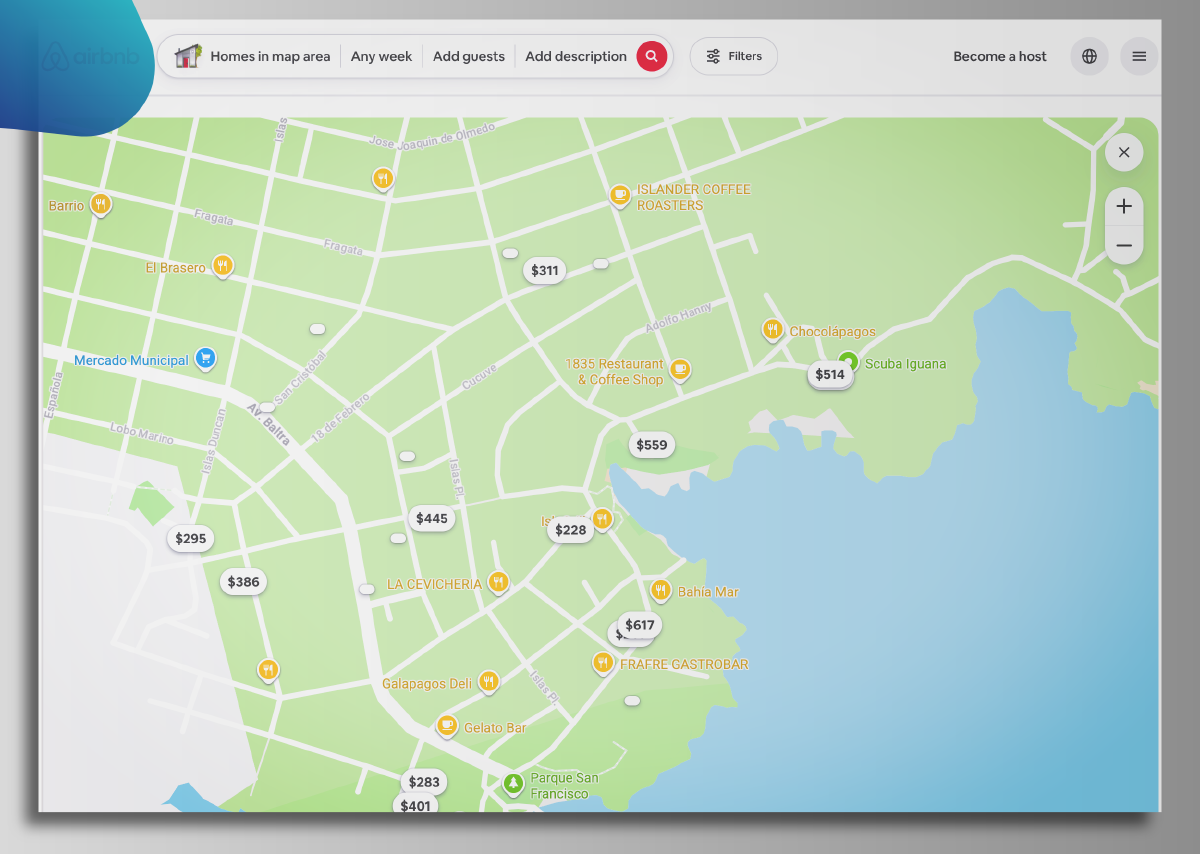

Translated from the original post in spanish.
Short-term rentals—by the day or week—have existed long before this model was popularized by the emergence of digital platforms such as Airbnb or Vrbo. In recent years, due to the rapid proliferation of such rentals—especially in cities that receive large numbers of tourists—many conflicts have arisen. This has led some national and local governments to regulate this activity.
Given the nature of this activity, it is very rare for such regulations to seek to completely ban short-term rentals. After all, it is a legitimate economic activity that responds to a demand. Therefore, in practical terms, regulation should aim to minimize the negative impacts of the activity, and to do so, it is necessary to understand and analyze in greater detail the origin of these conflicts and the dynamics of short-term rentals.
In this post, I highlight some key points for reflection, emphasizing how to analyze this activity in order to regulate it in a way that does not harm the interests of small property owners who may rely on it as a source of additional income.
On the Origins of the Platforms#
Both Airbnb and Vrbo emerged from the expansion of the internet and as solutions to very specific, almost personal problems faced by their creators. Airbnb, for example, was launched in 2007 as a way to generate income to pay for student housing rent1. Vrbo, on the other hand, was originally a website launched in 1995 to allow property owners to rent out their vacation homes2.
Both platforms became popular and grew as business models within what is known as the sharing economy. It is the idea of a peer-to-peer model—meaning that goods are exchanged between individuals rather than through companies—that led to their popularity. However, this is precisely one of the points of contention today, as we will see later.
In fact, being an online platform makes it easier for people to offer and receive goods without having to set up a company to do so. At least, this is the promise of many such applications. This virtual nature allows, among other things, for state and local regulations to be circumvented or bypassed, especially when they are not designed for this type of product. Thus, for example, Airbnb was able to become one of the first U.S. companies to operate in Cuba.
Criticism#
As these platforms have become more widespread and the number of properties listed on them has increased, criticism and opposition to them have become more common. In cities around the world, the main criticism driving regulation of this activity is its impact on rental prices. The fact is that in cities with high tourist traffic and a shortage of rental housing, many landlords find it more profitable to offer their properties for short-term rentals than for long-term local leases. This leads to a decrease in the supply of available housing and an increase in market prices due to the opportunity cost that landlords perceive.
In cities such as Paris, Barcelona, and New York, the displacement caused by this price increase has been documented and cited as a reason for regulating this type of rental. Renting a home in central locations is becoming increasingly unaffordable for local residents—in other words, gentrification. Many of these cities have chosen to regulate this type of activity in an effort to ensure that its presence does not affect the supply of rental housing or its prices 3. Of course, this regulation differs from city to city because each has its own specific rental housing policies and history. In Europe, for example, there are more regulations and greater investment in the rental housing market, whereas in most Latin American cities, this market is more private, speculative, and deregulated.
Regulations in Ecuador#
In Ecuador, although the impact of short-term rentals on housing rental prices has not been documented, efforts have been made to regulate this activity. However, the motivations and pressure for regulation stem primarily from the hotel sector, which views short-term rentals as unfair competition. Since 2016, tourism industry associations have lobbied authorities for regulation4 5 without much success. On the other hand, an association of hosts was created, ASOSERTURTEMEC—the Association of Temporary Tourism Services of Ecuador—which claims to promote short-term rentals in a legal and organized manner6.
Pressure to create regulations governing this activity sparked many reactions and debates, primarily on social media. For example, a post on X by former Ecuadorian President Guillermo Lasso in 2019. The former president expressed his opposition to the regulation of short-term rentals, arguing that it constituted an unnecessary intrusion into private matters.
Sobre el Reglamento contra Airbnb que busca decirnos cómo hacer uso de nuestra casa: pic.twitter.com/uxPJxkAjSo
— Guillermo Lasso (@LassoGuillermo) August 27, 2019
In 2023, specifically during Lasso’s administration, the Regulations on Tourist Accommodation in Residential Properties7 were issued following a “participatory” process that lasted more than a year, according to the then-Minister of Tourism.
Que quede claro: las plataformas de economía compartida de alojamiento como Airbnb y similares son bienvenidas en Ecuador. Participa con tus comentarios en este link y aporta a la construcción del mejor reglamento posible:https://t.co/QIlWO1pUsW pic.twitter.com/QYX1tqBKDZ
— Niels Olsen (@NielsOlsen) May 11, 2022
According to these regulations, certain requirements must be met to list properties under this model, the most important of which are: 1) obtaining a tourism registration (which requires a RUC or RIMPE) and 2) obtaining a single annual operating license issued by each municipality where the property is located. The regulations establish other conditions that must be met, such as maintaining a guest registry, providing information to customers, and addressing any complaints that may arise.
The Specifics and Ambiguities of the Regulations#
The regulations provide a vague definition of what constitutes a “residential property.” These are “privately owned real estate properties (belonging to individuals or legal entities) intended for the regular and temporary accommodation of guests.” The key point is the regularity of the activity; in other words, it must be a recurring practice. The regulations do not distinguish, for example, between properties where the owner resides and those intended exclusively for rental. The other ambiguous aspect is the temporary nature of the stay, as no maximum or minimum length of stay is established to qualify under this category, which creates contradictions with other types of short-term rentals. Generally, regulations aimed at reducing the impact of this activity on the housing rental market limit the minimum number of nights of accommodation.
Furthermore, the regulation assigns to municipal governments the responsibility for issuing the single operating license following verification of the property’s existence in the Tourism Registry. It also urges municipalities to update their land use and management ordinances to accommodate this activity, which could partially limit the role of local governments in planning.
Finally, the regulations apply to the entire territory of Ecuador, with the exception of the Province of Galápagos, for which a Hotel Regulation Plan is provided that must be approved by the Galápagos Special Regime Council (composed of a representative from the Presidency, the Ministry of the Environment, the Ministry of Tourism, the Ministry of Agriculture, the national planning agency, the mayors of the Galápagos cantons, and a representative from the parish councils).
Factors to Consider for Regulation#
There are two factors that are essential to ensuring that the regulation is fair. First, the specific characteristics of the properties and tenants. If the goal is to allow short-term rentals to serve as a source of additional income for some people, the process of doing so within the law must be relatively simple and inexpensive. The current regulations do not meet these conditions, as they require, on the one hand, a RUC or RIMPE (which takes time and resources for those who do not have one), as well as tourism registration and a single operating license. These restrictions may, on the contrary, favor corporate landlords who have the resources to meet these requirements. In this case, it is necessary to know whether the property is rented in its entirety or in part, whether the owner resides in the property, the number of nights offered per year, and, above all, whether the renter (or host) offers more than one property under this model. The existence of corporate renters (or hosts) is one of the most clearly identified problems in other cities. In Ecuador, a similar situation appears to exist, judging by the promotion of buildings dedicated almost entirely to short-term rentals.

Second, there are the characteristics of the properties and their location. In cities where regulation is driven by the need to keep rent prices in check, the hyperconcentration of properties dedicated to short-term rentals in residential neighborhoods has been identified as the main problem. Therefore, it is advisable to limit the number of operating licenses in a differentiated manner depending on the location within the city; thus, some neighborhoods may allow for a small number of short-term rental properties without affecting regular rental prices 8 9.
In Conclusion (Partial)#
Regulation of short-term rentals is necessary in all cases; however, it must:
- Take into account local specificities, especially in cities. A national-level regulation is unlikely to accommodate these specificities.
- Be designed to minimize the negative effects of this activity, particularly rising housing rental prices, increased costs of utilities, and environmental impacts on residential neighborhoods.
- Be flexible over time and space.
- Be informed by real data on the status of this activity in the local context.
In future posts, I will address the specific characteristics of this activity in the Galápagos and the ways to access and analyze data that may be useful for regulation.
References#
https://es.euronews.com/viajes/2023/06/12/que-paises-estan-tomando-medidas-contra-los-alquileres-tipo-airbnb. ↩︎
https://www.hosteltur.com/lat/126000_plantearan-oea-elabore-ley-marco-plataformas-online-alojamiento.html. ↩︎
https://www.elcomercio.com/tendencias/ecuador-regular-airbnb/. ↩︎
https://www.turismo.gob.ec/wp-content/uploads/2023/10/Acuerdo-Ministerial-Nro.-2023-011-Reglamento-Alojamiento-Turistico.pdf ↩︎
Allen, James A. 2017. “Disrupting Affordable Housing: Regulating Airbnb and Other Short-Term Rental Hosting in New York City.” Journal of Affordable Housing & Community Development Law 26 (1): 151–92. ↩︎
Wegmann, Jake, and Junfeng Jiao. 2017. “Taming Airbnb: Toward Guiding Principles for Local Regulation of Urban Vacation Rentals Based on Empirical Results from Five US Cities.” Land Use Policy 69: 495–501. https://doi.org/10.1016/j.landusepol.2017.09.025. ↩︎